

People label Artificial Intelligence and Machine Learning “the future” so often that we forget their unglamorous foundations. The field sits on decades of hard mathematics and a couple of brutal funding collapses. Underneath all of it runs one old human habit: imagining thinking machines long before anyone could build them. This article is the foundational version of that story. It covers what these terms mean, how the field arrived here, and where it reliably breaks.
The framing matters because the hype is back. In late 2015, the World Economic Forum prepared a meeting themed “Mastering the Fourth Industrial Revolution.” Klaus Schwab argued that a technological shift would reshape how we live and work. He built the claim on the Third Industrial Revolution and its waves of computing and automation. AI was one of his central pillars. A decade later, that claim looks less like prophecy than like an experiment we are all living inside. That is exactly why the fundamentals beat nodding along to the marketing.

Machine learning turns data into decisions — the quality of the first determines the trustworthiness of the second.
Technically, Artificial Intelligence (AI) builds systems that perceive their environment and act toward a defined objective. Machine Learning (ML) is the subfield that gets there from data. Instead of hand-written rules for every case, its algorithms improve at a task by learning from examples. Keep the distinction in mind: AI is the goal, and ML is currently the most productive route to it.
From Myth to Machine: a Short History of the Idea
The dream — and occasionally the nightmare — of building minds is ancient. Greek mythology gave us Talos, a bronze guardian of Crete and an early image of an intelligent machine. In the 18th century, a chess-playing automaton called The Turk toured Europe and astonished audiences. It later turned out to be a hoax: a human operator sat hidden inside. The deception is the point. Our appetite for intelligent machinery ran centuries ahead of our means to deliver it. That gap between appearance and substance recurs throughout this story.
The serious mathematics arrived later. In 1943, Warren McCulloch and Walter Pitts published “A Logical Calculus of the Ideas Immanent in Nervous Activity.” Their paper modelled how neurons might compute. It became the conceptual ancestor of every neural network in production today. In 1950, Alan Turing published “Computing Machinery and Intelligence.” He sidestepped the unanswerable question of whether machines can think and proposed an operational test instead. That test still anchors the conversation seventy-five years on.
How AI Became a Field — and Survived Its Winters
Dartmouth, 1956
The discipline got its name at the 1956 Dartmouth Summer Research Project on Artificial Intelligence. Its founders set extravagantly ambitious goals. That pattern — ambition outrunning capability — would define the next several decades. Soon after, Arthur Samuel’s self-improving checkers programs showed machines getting measurably better through experience. Samuel also coined the term “machine learning” in 1959. In 1966, Joseph Weizenbaum’s ELIZA became one of the earliest conversational programs. In 1979, the Stanford Cart crossed a chair-strewn room on its own. The trip took five hours, but it marked a real landmark in robotics.
The AI Winter — and Why It Still Matters
By the 1980s, the bill came due. Promises had outpaced results, funding evaporated, and the field entered its first “AI Winter.” This is the most useful chapter to re-read right now. Every AI cycle since has rhymed: capability outpaces delivery, money chases the narrative, and the correction is brutal. Making architecture or investment bets on AI today? Treat the winters as a risk model, not ancient history. The technology is real. The timelines on the slides usually are not.
The Modern Renaissance: Data and Compute
The current era runs on two forces. Data exploded, and the cost of computation collapsed. Deep learning uses multi-layer neural networks. The design draws loosely on biological neurons rather than copying the brain. It became practical only once both data and compute arrived. IBM’s Deep Blue beat world champion Garry Kasparov in 1997, the symbolic turning point. By the 2010s, the same techniques ran quietly in production. They handled fraud detection at PayPal, recommendations on Netflix, and voice assistants on phones. AI stopped being a research curiosity and became infrastructure.
What Machine Learning Actually Is
Traditional software encodes a human’s instructions for every case it expects. Machine Learning inverts that. You supply data and an objective, and the system derives its own mapping from inputs to outputs. The closest analogy is teaching someone to reason and generalise instead of handing over an answer key. The same caveat applies, though: a model only generalises as well as the examples it learned from.
The Workflow: Train, Validate, Test
In practice, you split the data into three roles. Conflating them is one of the most common ways teams fool themselves:
Training set — the model learns the input-to-output mapping by finding patterns here.
Validation set — held-out data for tuning the model and catching overfitting before any final score.
Test set — you touch it once, at the end, to estimate behaviour on genuinely unseen data.
The Three Learning Paradigms
Supervised learning uses labelled data, where every input carries its correct output. Spam filters and image classifiers live here.
Unsupervised learning works on unlabelled data and surfaces structure on its own, such as customer segments or anomalies.
Reinforcement learning learns by acting in an environment and collecting rewards or penalties, as in robotics and game-playing agents.
Where It Breaks: Bias, Accountability, and Trust
The failure modes are not science-fiction risks. They are engineering and governance problems, and the biggest is bias. A model compresses its training data, so biased or incomplete data yields biased or unfair outputs. Facial-recognition systems illustrate this: many show far higher error rates for certain demographic groups. The uncomfortable implication is simple. Bias is not an ethics appendix you bolt on at the end. It is a data-lineage and governance concern that lives inside your pipeline. You design for it, or you apologise for it later.
The rest follows from there. Who is accountable when an autonomous vehicle causes a crash? How do you keep a system’s behaviour auditable when even its builders cannot fully explain a single decision? These questions are not reasons to avoid the technology. They are the specification you build against.
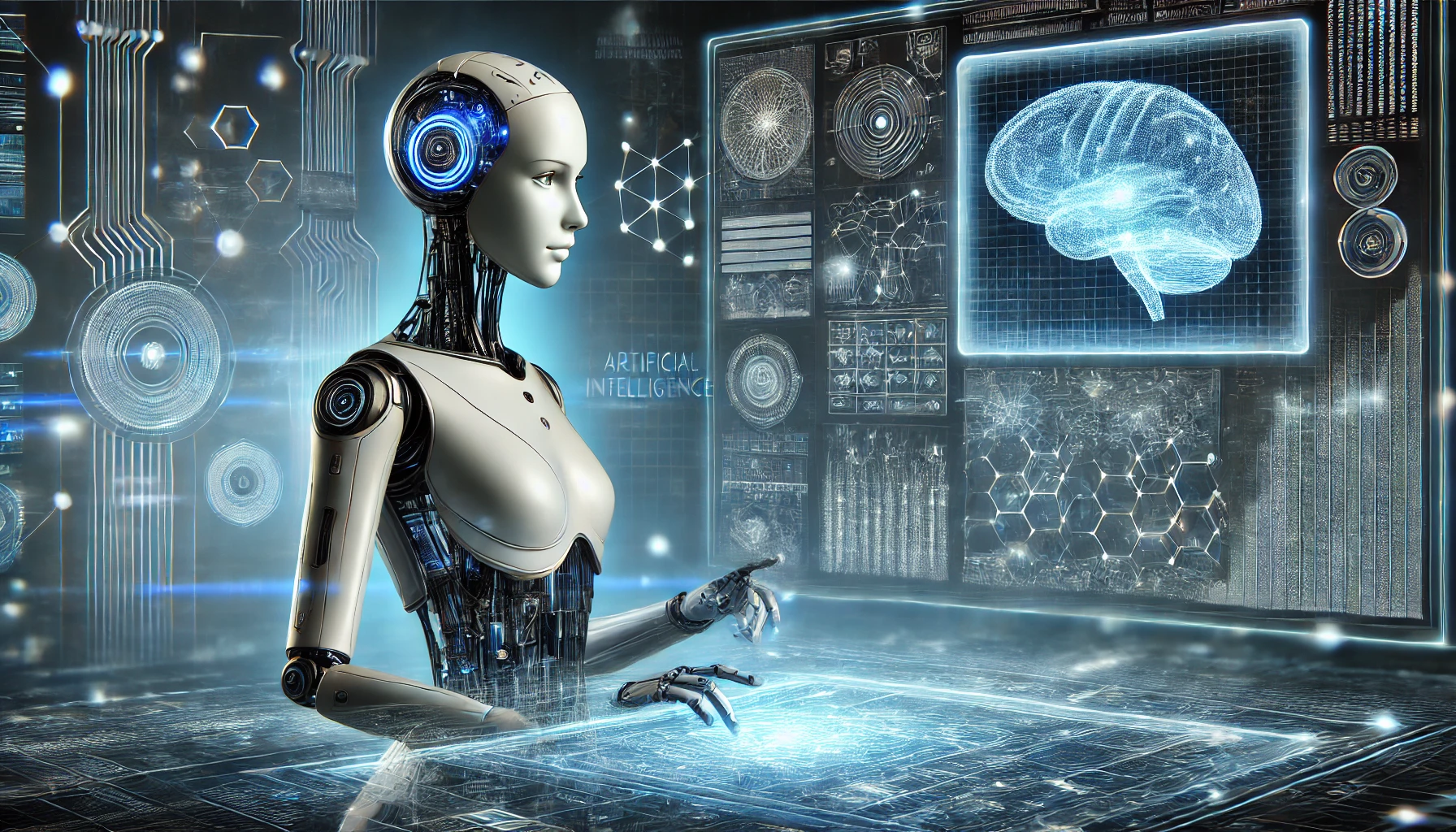
The interesting questions about AI ask less about what it can do and more about who answers when it acts.
Why This Matters If You Build Systems
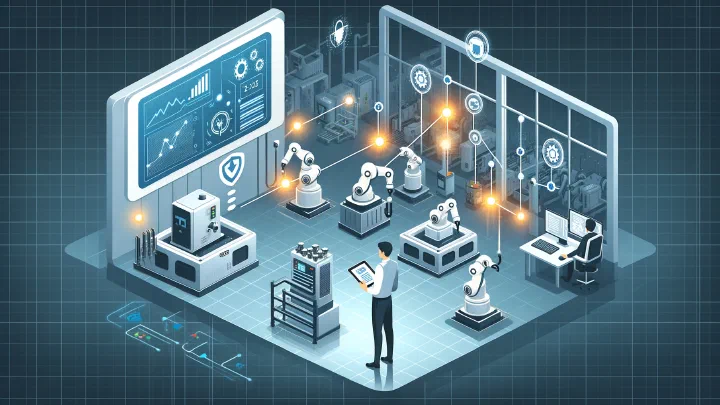
Most introductions to Artificial Intelligence and Machine Learning stop at the demo. The harder part starts when a model leaves the notebook and lands in production. That production might be a regulated bank, a national healthcare platform, or a multi-tenant enterprise. At that point the dominant questions change. They stop being about model accuracy and start being about data residency, identity, network isolation, cost control, and governance. The model is rarely the risky component. The operating model around it is.
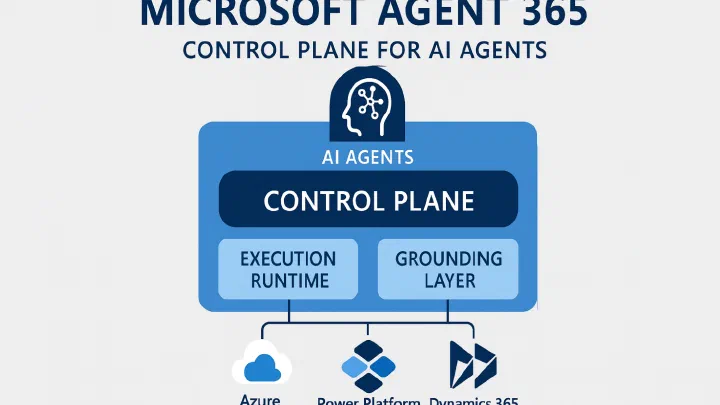
That is a different set of articles. For example, enterprises have to structure multiple Azure tenants when isolation and governance are non-negotiable. Other questions surface when AI agents become first-class actors in your estate, as the Microsoft Agent 365 review explores. To go further back in the timeline, these foundations continue directly from the Third Industrial Revolution.
Conclusion
Artificial Intelligence and Machine Learning travelled from myth and speculation to the plumbing of modern systems. They now shape how we work, decide, and build. The remaining hard problems — bias, accountability, transparency, and the constant temptation to oversell — are the price of that reach. Treat the fundamentals seriously and stay sceptical of the timelines. Do that, and the technology becomes a tool you can reason about rather than a narrative you must believe.
Building or governing AI workloads on Azure? The practical tooling and templates I use live at cld2day.com/Tools.
References
The Third Industrial Revolution: Impact and Insights
Turing, Alan (1950), “Computing Machinery and Intelligence,” Mind 49, pp. 433–460

Comments
Comments are stored in GitHub Discussions. Sign in with GitHub to comment or react.